


If you've ever found yourself wondering, "Am I doing this right?" while training with your dog, you're in good hands.
Teaching a canine isn't about perfection. It's about building understanding, one small step at a time. And once that connection starts to click, everything else comes easy.
Why Dog Training Matters More Than You Think
Building trust and communication
At its core, the most important amongst all the dog training tips is simply about communication.
A distressed dog is always trying to figure out what works. When the signals become clear, dog behaviour begins to improve, and that's when real progress happens. This is true regardless of breed or age, the foundation of any well-behaved dog starts with how clearly you communicate.
Preventing unwanted habits early
Behaviours like pulling, jumping, or not responding to commands aren't signs of a bad dog. They're just unrefined habits that haven't been properly shaped yet.
Starting early, especially during puppy training, helps avoid frustration later on. Whether you're working with your puppy or even with an adult dog, keeping things simple is essential before considering more advanced training classes or obedience training down the line.
Start with the Right Mindset
Before anything else, it's an essential dog training step to look at our pet's behaviour differently.
Behaviours that result in positive outcomes are naturally repeated, and this is where reinforcement becomes essential. It's the same principle used by every reputable training instructor and animal training expert in the UK and beyond.
With it comes our patience as well. Patience brings out the best dog training more than anything. Some days will feel easy. Others won't, and that's completely normal.
Step 1: Start Simple with One Command
When you begin to train your dog, focus on one command at a time.
A great place to start is getting a dog to sit, one of the cornerstones of basic obedience. Use a training treat, guide the movement, and clearly repeat the command.
These simple steps help your dog understand better during training sessions. Additionally, it's important to note that short sessions work best, especially in the early stages of dog training. Once a single command is solid, you can gradually layer in more training techniques like "stay," "come," or even a fun trick to keep your pet engaged.
Step 2: Use Motivation That Works
Every dog learns differently.
A good reward, whether it's a treat, attention, or a toy, makes learning easier. Keeping treats ready in a treat pouch or treat bag helps you respond at the right moment, a small habit that most pet dog trainers swear by.
Using a chew or enrichment toy like this can also support learning and keep your dog engaged with this interactive toy.
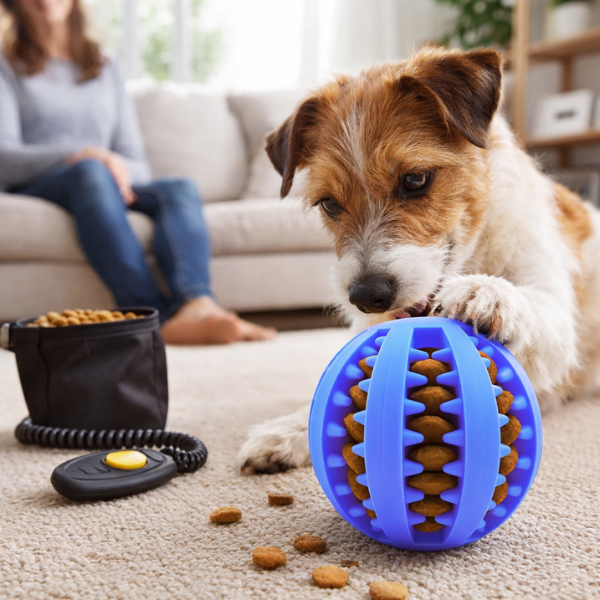
A toy that acts as a dispenser for dog treats is perfect to allow more stimulation for your puppy or dog.
This makes it easier to get consistent results without adding pressure at any time.
Step 3: Make Communication Clear
Clear communication is important for training and connecting with your dog.
Using a clicker can help mark the exact moment the behaviour is correct. Clicker training is one of the most popular dog training methods because it helps your dog understand better and keeps training consistent.
Some owners also use interactive tools to support communication in a simple way through this talking button toy.
These tools open up a new layer of behavioural understanding, letting your dog signal needs in a way that feels natural to them.
Step 4: Practice in Real Life
Dog training doesn't stop at home.
Practicing with your dog during daily routines makes learning more natural. Teaching them outside also makes it better for your dog to be more attentive and mindful, even with distraction from other people, animals, or sounds around them. Learning to retrieve a toy in the park, for example, is a great way to test focus in a real-world setting.
However, such practice would need the right dog training equipment.
A good collar or harness, along with a reliable leash, helps guide behaviour without stress. It also introduces better discipline by teaching your dog to come back.
For example, a retractable leash offers flexibility during walks.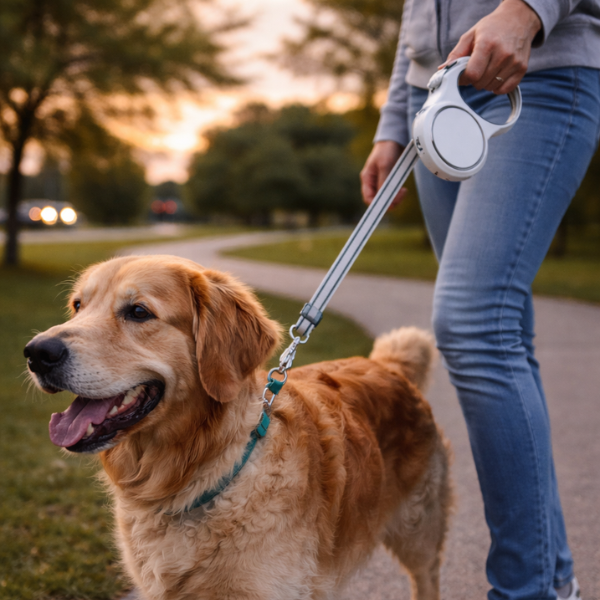
If you have more than one pet, a double leash can simplify things and further prevents your dog to leave by your side.
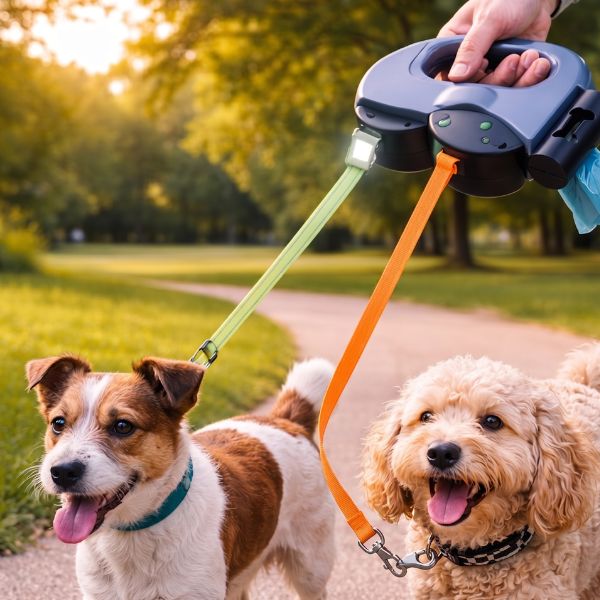
These small adjustments make everyday routines easier for keeping your dog's lifestyle peaceful and stimulating.
Step 5: Stay Consistent
Consistency is what turns effort into results.
Whether you're following advice from a professional dog trainer, working with an instructor, or building your own routine, what matters most is repetition.
Adjust your training when needed, simplify when things don't work, and stay patient.
Over time, this helps the dog build habits that feel natural, the kind of habits that define a truly well-behaved dog.
The goal is not perfection, but progress.
Final Thoughts
A good training journey isn't about control. Training is about clarity, consistency, and connection.
All dog parents might follow these exact same steps, but not everyone has the dedication and passion essential for both you and your dog. With the right tools, training essentials, and approach, it makes training easier and fun.
And if things feel slow sometimes, that's okay!
That's often where the real learning happens.