


Travelling with a dog is almost always worth the extra effort. Almost. The planning, the paperwork, the 11pm Google rabbit hole of airline pet policies: that part is considerably less enjoyable. But get the preparation right and the actual trip tends to look after itself.
Whether you're loading up the car for a summer road trip or putting your dog in the hold of a plane, the fundamentals are the same. Your four-legged companion needs to be safe, comfortable, and easy to identify if anything goes wrong. That last one is the piece most dog owners overlook until it's too late.
Here's what's worth sorting before you leave.
Before You Leave: Sort These Things First
The week before any trip has a habit of collapsing into chaos. Dog travel preparation works best done two or three weeks out, not the night before. Give yourself the time to do it properly.
Start with the ID tag
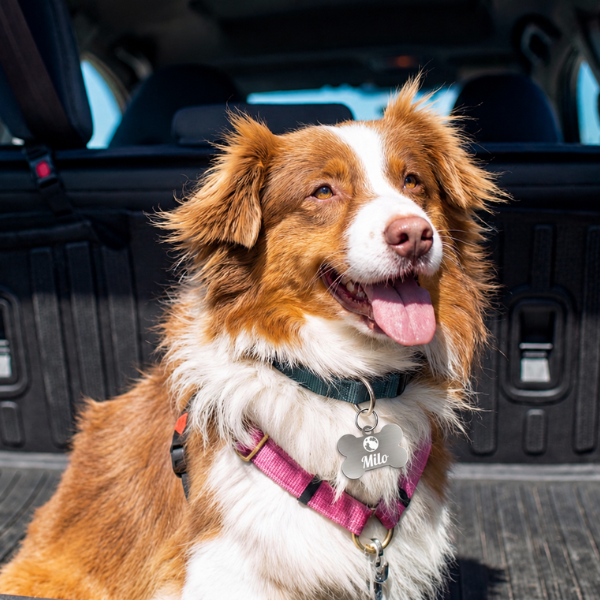
It sounds basic, and that's precisely why people skip it. ID tags are a legal requirement in most countries, and your dog must wear one with your current contact details whenever they're in a public place. That covers service stations, airport car parks, ferry ports, and every beach, rest stop, and layby along the way.
Before you travel, look at the tag properly. Not a glance in passing. Actually hold it and read it. Is the engraving still clear? Is the phone number the one you'll have with you on the trip? If you've moved or changed your number in the last year, the chances are the tag is already out of date.
This matters more than most people realise. If your dog slips their lead in a place they don't know and a stranger picks them up, that tag is the fastest route back to you. Not the microchip, which needs a scanner and a trip to a rescue centre or vet to be of any use. The tag, right there on the collar, readable by anyone.
If the engraving is worn down or hard to read, replace the tag before you go. A new engraved dog ID tag costs very little and takes minutes to order. A classic engraved dog collar with your contact details in the buckle gives you a second layer of identification that stays put even if the tag itself comes loose on the journey.
The vet visit and the paperwork
If you're crossing a border with your dog, you'll need a dog passport or the equivalent travel documentation for your destination. The rules vary by country, but in most cases the paperwork has to be signed off by a veterinarian within a specific window before your travel date. Look this up early. Leaving it until the week you're flying is one of the most common dog travel mistakes and one of the most avoidable.
Your vet visit should also cover vaccinations, any health certificate the airline or destination requires, and parasite treatments if they're needed. Some countries impose quarantine periods on dogs arriving from certain places, so it's worth researching that well in advance rather than discovering it at the border.
Insurance and a backup plan
Make sure your pet insurance covers travel, including emergency vet treatment abroad. Vet fees in another country can be significant, and the last thing you want when your dog is unwell is to be worrying about the bill on top of everything else.
It's also sensible to have a trusted sitter or boarding option arranged before you leave, even if you don't expect to need them. Delays happen. Plans fall apart. Having someone reliable who can step in at short notice removes at least one category of potential stress from the trip.
Driving with Your Dog: How to Get It Right
A road trip is the option most dog owners prefer, and with good reason. Your dog stays with you, you control the pace, and there are no airline restrictions to deal with. When it goes well, dogs often take to car travel brilliantly. When it doesn't, it's a long and noisy few hours for everyone. A bit of preparation makes the difference.
Keep your dog properly restrained
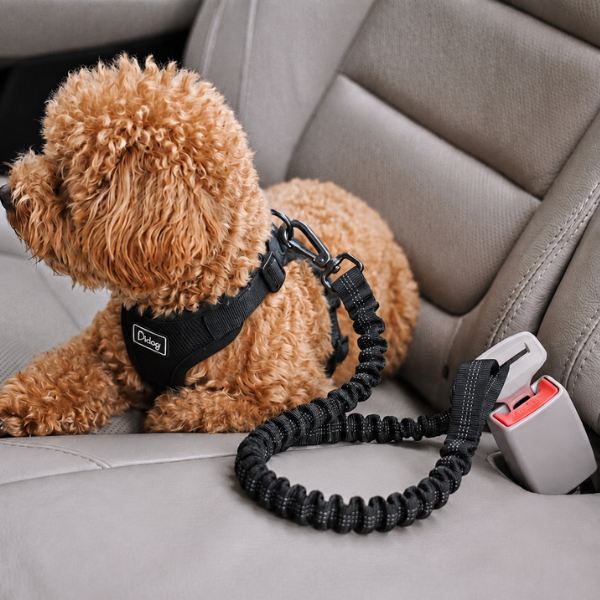
Dogs should always be secured when travelling in a car. An unrestrained dog in a moving vehicle is a distraction to the driver and a risk to themselves if you brake sharply or have an accident. The main options are a harness clipped to a seat belt point, a secured travel crate in the cargo area, or a dog guard that keeps them in the back.
A reflective safety car seat belt leash is a straightforward choice for dogs who are comfortable in the back seat. It clips into a standard seat belt socket and gives your dog enough room to settle without being able to roam forward. The reflective strip is a useful bonus if you're walking them at dusk during a stop.
A hot car is dangerous within minutes
Temperatures inside a parked car rise faster than most people expect, and the consequences for a dog left inside can be fatal. On a warm summer day, even a brief stop with the windows cracked is enough to cause serious harm. The rule is simple: if your dog can't come with you, you need either a second person who stays with them in the car or a dog-friendly alternative for wherever you're stopping. There is no errand quick enough to justify the risk.
Plan your route around proper stops
Build in breaks every couple of hours on a long drive. Dogs need to stretch, walk, and use the facilities, and a good rest stop can reset the whole mood of the car. Look for places with grass rather than paved surfaces, and where your dog has room to roam safely on the lead before getting back in.
Take more water than you think you'll need. A collapsible travel bowl folds flat in a bag and means you can offer water at every stop without any fuss. This matters more in the heat. Dehydration in summer is a genuine concern for dogs in transit.
What to do if your dog gets car sick
Car sickness is more common than people think, particularly in younger dogs who haven't done much car travel yet. A light meal a few hours before setting off, rather than right before you leave, tends to help. Good airflow in the back of the car makes a difference too.
If your dog consistently struggles, speak to your vet before the trip. There are anti-anxiety and motion sickness options that can make longer journeys genuinely manageable. And if you're planning a big summer road trip with a dog who normally only does short car rides, a few practice runs in the weeks before will pay dividends on the day.
Flying with Your Dog: What Every Owner Needs to Know
Air travel with dogs is more involved than road travel, and it's important to understand what you're actually arranging before you commit to anything. The rules vary significantly between airlines, and some situations don't have a good solution beyond leaving your dog at home with a sitter.
Cabin or hold?
Most dogs travel in the cargo hold, not the cabin. Some airlines allow small dogs to travel in the cabin in a well-ventilated, soft-sided pet carrier that fits under the seat in front, but the weight and size limits are strict and not all breeds qualify. If your dog is medium-sized or larger, the hold is almost certainly the only option available.
The cargo hold on a modern commercial aircraft is pressurised and temperature-controlled, and plenty of dogs travel in one without issue. But it is a genuinely unfamiliar environment: loud, enclosed, and completely separate from you. For a dog that's already anxious or hasn't spent much time in a crate, that's worth weighing up seriously before you book.
Getting the crate right
Dogs flying in the cargo hold must travel in an approved hard-sided crate that meets airline standards. The crate needs to be large enough for your dog to stand up fully, turn around, and lie down flat. Measure your dog before you buy or borrow anything, and check the specific requirements of your airline, as they can differ.
A crate that's too small will be refused at check-in. Label the outside clearly with your name, contact number, and a photo of your dog. If there's any medical information that's relevant, include that too. In the event of any delay or mix-up, staff need to be able to identify whose dog they're looking at and how to reach you.
Flat-faced breeds need extra consideration
Brachycephalic dogs (French Bulldogs, Pugs, Bulldogs, Boxers, and any breed with a significantly shortened muzzle) face additional risks in the cargo hold. Their compressed airways make breathing harder in normal conditions; add in the stress of air travel and the results can be serious. Many airlines have introduced restrictions or outright bans on brachycephalic breeds in the hold. This isn't a technicality buried in the terms and conditions; it's a genuine welfare issue. If you own a flat-faced breed, check the airline's breed policy thoroughly before you get any further with your plans.
Documentation and health certificates
Flying internationally with your dog requires up-to-date documentation. Most airlines need a health certificate from a veterinarian confirming the dog is fit to fly, and this is usually required within a short window before your travel date. Your dog passport will need to be current and in order for the destination country. Sort these well in advance.
And do not sedate your dog for the flight. It might seem like it would help a nervous dog settle, but sedatives affect their ability to regulate their temperature and maintain balance, and those risks are amplified at altitude. Talk to your vet about safer alternatives if your dog genuinely needs support to cope with air travel.
Keep them identifiable throughout the journey
Your dog's collar and ID tag should be on them for the entire journey, not packed away in your bag. If a crate is delayed, misrouted, or handed over to unfamiliar staff, the tag is what gets them back to you quickly. Many owners also clip an AirTag holder onto the collar when flying, which means they can track their dog's location throughout the journey. It's not a substitute for a proper ID tag, but on a stressful travel day, being able to see where your dog is provides real reassurance.
Travelling in Summer: The Extra Things That Matter
Summer travel with a dog adds a layer of considerations that don't apply the rest of the year. Heat changes things significantly, both on the road and at your destination.
Heat stroke is faster than you think
Dogs cool themselves through panting, which becomes much less effective in high temperatures and humidity. Heat stroke can develop in a short space of time, particularly in enclosed spaces such as cars, transit vehicles, and busy outdoor areas without shade. The signs are heavy panting, excessive drooling, glazed eyes, vomiting, and a loss of coordination. If you spot any of these, get your dog to a cool and shaded area immediately, offer water, and contact a vet without delay.
Check the ground before you walk on it
Hot ground and paving can reach temperatures that will burn a dog's paw pads in seconds. Before any walk on a warm day, press the back of your hand flat against the ground for five seconds. If it's painful or uncomfortable for you, it will hurt your dog. Choose grass and shaded paths where you can, and time your walks for the cooler parts of the day.
If your dog is going to be on their feet a lot at the destination, an organic paw balm applied before and after walks can help protect the pads and soothe any irritation that builds up over the course of the trip.
Keep routine as consistent as you can
Dogs handle new environments better when feeding times and walk schedules stay roughly normal. A familiar blanket or toy in their sleeping spot helps more than most owners expect. It won't eliminate the strangeness of somewhere new, but it gives them something familiar to settle around.
.png)
The One Thing to Do Before Anything Else
Of everything covered here, the ID tag is the quickest fix and the one that matters most in a genuine emergency. A lost dog in an unfamiliar place is a frightening situation. A dog with a readable tag and a current mobile number on it has a very good chance of being back with their owner within the hour. A dog with an outdated or unreadable tag has considerably less.
Check the tag now, before the trip planning goes any further. If the details are wrong, or the engraving has worn down to the point where it's difficult to read, order a new one today. It takes five minutes and it might be the most useful thing you do for your dog before you go.
Good travels to both of you.